
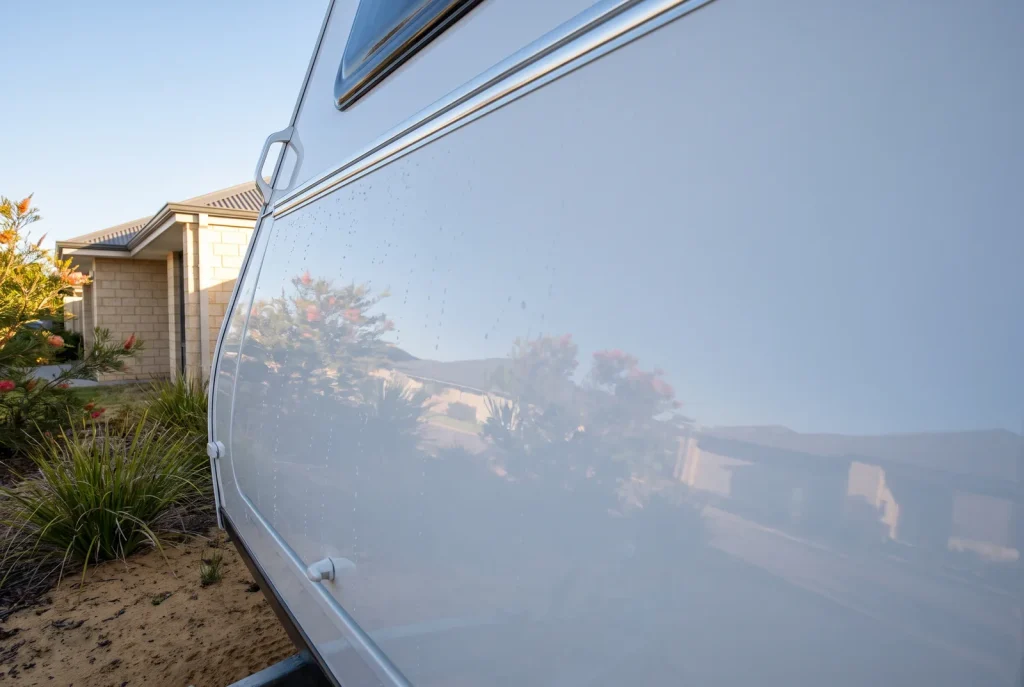
Most caravan owners underestimate how quickly a unit ages here. The relentless UV, the salt drifting in off the coast, scorching summer heat and the fine red dust from outback runs all work together to break down protective surfaces faster than people think. Staying ahead of that damage comes down to one thing: knowing the right detailing interval for your situation. If you’d rather plan a climate-appropriate rhythm with help, professional caravan detailing Perth services can map a schedule to how and where you actually use your van.
Why Perth’s Climate Is So Hard on Caravans
Western Australia delivers some of the highest UV levels in the country. That constant exposure attacks clear coats, fibreglass gel coat and decals, leading to fading, chalking and oxidation over time. Heat compounds the problem, baking contaminants onto panels and accelerating the breakdown of any protective layer.
Then there’s the coast. Salt air carries fine, corrosive particles that settle on every surface, working into seams, fittings and metalwork. Inland, the picture changes but doesn’t get easier. Red dust from outback and rural touring is abrasive and clingy, and it stains badly when left to sit through a hot afternoon.
Few caravans escape all four stressors. A van stored near the coast and toured through the interior copes with the worst of every category, which is exactly why a one-size-fits-all schedule rarely works in WA.
General Detailing Frequency Guidelines for WA
As a starting point, many caravans benefit from a thorough detail roughly every three to six months, with lighter maintenance washes in between. In Perth’s conditions, lean towards the shorter end of that range rather than stretching it out.
Adjust the interval based on the pressures your van actually faces:
- Coastal storage or frequent coastal trips: shorten the interval to stay ahead of salt build-up.
- Heavy summer use under strong UV: plan an extra protective treatment heading into the hottest months.
- Regular outback or gravel touring: schedule attention after dusty trips to remove abrasive grit.
- Mostly garaged and lightly used: you can usually stretch intervals, but don’t skip them entirely.
The goal isn’t a rigid number. It’s matching the frequency to the stress your particular van endures.
How Storage and Usage Change Your Schedule
Where your caravan lives between trips matters as much as how often you tow it. A garaged van is shielded from direct UV and overnight salt settling, so its protective layers last longer and intervals can be a little more relaxed.
An open-air or carport-stored van takes a constant beating from sun and airborne salt, even when parked. These units generally need more frequent attention to keep oxidation at bay.
Usage adds another layer. Occasional weekend trips put far less stress on surfaces than full-time or extended touring. If you live in your van for weeks at a time across changing climates, expect to detail more often than a holiday user who heads out a handful of times a year. Think of your schedule as a combination of storage exposure plus kilometres travelled and terrain covered.
Seasonal Timing That Works in WA
Timing your detailing around the calendar gives you the best return. The two highest-value moments are before and after summer.
Heading into summer, a protective detail helps panels resist months of intense UV and heat. After summer, a follow-up addresses any contaminants that baked on and reassesses how the surfaces held up.
Trips are the other natural trigger. Before a long coastal or outback journey, getting the van properly protected makes the inevitable salt and dust far easier to manage. After that trip, prompt attention removes abrasive grit and staining before they have time to settle in. If you’d like a clearer picture of what that thorough service covers, our overview of what’s included in a full caravan detail walks through the typical scope.
Warning Signs Your Caravan Is Overdue
Your van will tell you when it’s been neglected. Watch for these signs:
- A chalky or powdery film on fibreglass that wipes off on your hand.
- Dull, flat panels that have lost their depth and shine.
- Early oxidation showing as faded, washed-out colour on painted or gel-coat surfaces.
- Stubborn dust staining that won’t rinse away cleanly, especially after outback travel.
- Water no longer beading on the surface, suggesting protection has worn through.
If you’re spotting two or more of these, your van has likely been waiting too long between details. Catching them early keeps maintenance simple rather than letting damage set in.
Building a Simple Year-Round Schedule
You don’t need anything complicated. A workable rhythm for many Perth owners looks like this:
- Book a protective detail in late spring, before summer UV peaks.
- Keep surfaces clean with regular maintenance washes through the warmer months.
- Schedule a post-summer detail in autumn to assess and refresh protection.
- Add a targeted detail before and after any major coastal or outback trip.
- Review the plan each year and tighten intervals if your van shows wear sooner.
Adjust the frequency up if you store outdoors near the coast or tour heavily, and ease off slightly if your van stays garaged and sees light use. The point is consistency: a predictable schedule beats reacting to damage after it appears.
One question naturally follows from all this, and it’s worth answering properly next time: the difference between caravan washing and detailing, and why one can’t simply replace the other.