
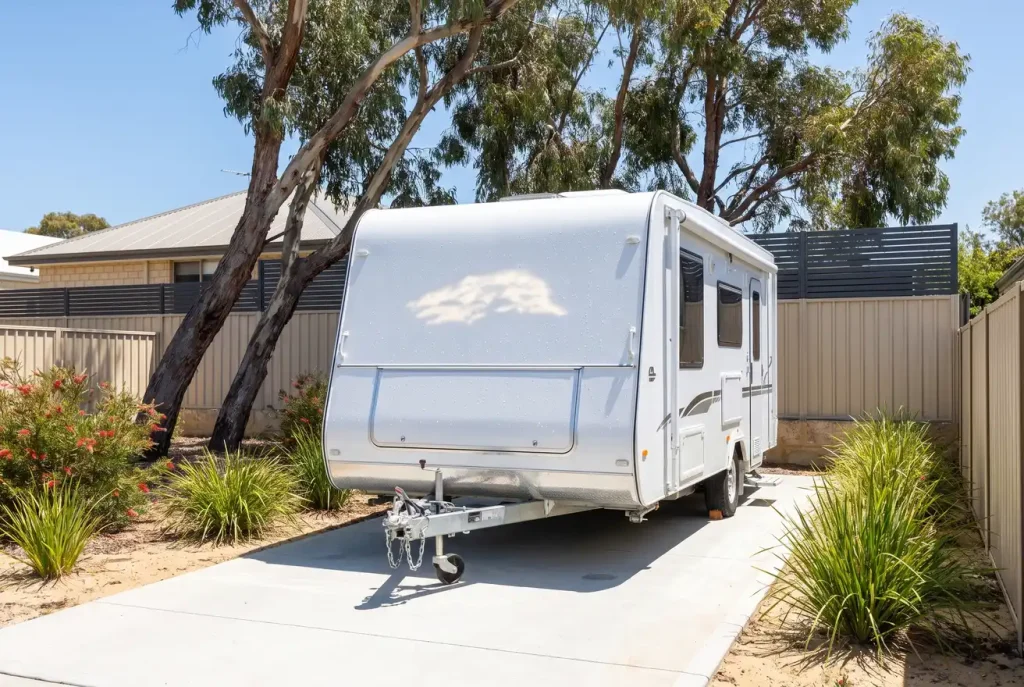
By the time a caravan looks dull, oxidation has usually been at work for months. It begins quietly, spreading across panels through seasons of Western Australian sun and salt-laden air before any visible change appears. Intercepting it early is far cheaper and easier than restoration, and a proactive routine is something owners can start themselves or hand to a local caravan exterior detailing team who can spot the earliest stages before they spread.
What Oxidation Actually Is and How It Begins
Oxidation is a chemical breakdown of a surface caused by exposure to oxygen, UV radiation and moisture over time. On a caravan, it works differently across the three common exterior materials.
- Fibreglass: The gel coat that seals fibreglass slowly loses its resins under UV exposure, leaving a porous, chalky layer on top.
- Aluminium: The metal reacts with air to form a dull grey or white powdery film, and salt accelerates this considerably.
- Painted panels: The clear coat degrades first, allowing the colour beneath to fade and the finish to lose depth.
In every case, oxidation is progressive. It does not stop on its own. Left alone, a faint haze becomes a dull film, then the chalky stage that only cut and polish or restoration can address.
The Early Warning Signs Owners Routinely Miss
The first signs of oxidation are subtle enough to be dismissed as dust or a bad angle of light. Learning to recognise them is the single most useful prevention skill an owner can develop.
- A faint loss of gloss, where panels no longer reflect sharply.
- Slight chalkiness that leaves a light residue on your hand or cloth after wiping.
- Colours that look flat or muted compared to sheltered areas like under the awning rail.
- Water that no longer beads and instead sheets flatly across the surface.
A simple test helps. Wipe a clean, damp microfibre cloth across a sun-facing panel. If it comes away with a faint white or colour-tinted smudge, oxidation has already begun. That is the moment to act, not months later when the dulling is obvious.
Environmental Triggers Specific to WA
Western Australia combines several conditions that push oxidation along faster than milder climates. Understanding them helps you time your maintenance.
Intense heat cycles matter as much as the heat itself. Panels expand under the midday sun and contract overnight, and this repeated movement stresses gel coat and clear coat, opening tiny pathways for breakdown. Coastal and near-coastal parking adds salt to the air, and salt is both corrosive and hygroscopic, holding moisture against the surface long after the air has dried.
Prolonged parking exposure is the quiet culprit. A caravan that sits between trips for weeks or months, uncovered on a driveway or in a yard, accumulates far more oxidation stress than one used and rinsed regularly. Time under the sun, not distance travelled, does the damage.
A Practical Prevention Routine
Prevention does not require special skill. It requires consistency and a few good habits repeated on a sensible schedule.
- Wash regularly: Rinse and wash the exterior often enough to remove salt, road film and contaminants before they settle. In coastal areas or during heavy use, this means more frequently than you might expect.
- Dry with discipline: Do not let a caravan air-dry in the sun. Drying by hand removes the last of any mineral or salt residue and prevents it baking onto the surface. This ties directly into good habits around minimising water spotting in hard water, which shares the same drying discipline.
- Inspect between trips: Walk around the van after each outing and again before long storage. Run the damp-cloth test on the panels that face the sun most.
- Wash from top to bottom: Contaminants run downward, so working in that order avoids dragging grit across already-clean panels.
None of these steps is difficult, but skipping them for a season is often all it takes for oxidation to gain a foothold.
Why Light Maintenance Beats Correction Work
There is a clear reason to favour frequent, gentle care over occasional heavy correction. Cut and polish removes a thin layer of the surface to reveal fresh material underneath. Gel coat and clear coat are finite, so every correction shortens the life of the finish. Regular washing and drying remove almost none of the surface and simply keep contaminants from settling.
Put simply, prevention preserves the material you already have. Correction spends it. A caravan maintained with light routine care can go years without needing aggressive restoration, while one left to oxidise may need correction every time it dulls.
How Storage and Covering Choices Influence Oxidation
Where and how a caravan rests between trips shapes how quickly oxidation develops. Undercover or shaded storage reduces UV and heat cycling dramatically, and this alone slows the whole process. A breathable, well-fitted cover shields the surface while allowing moisture to escape.
Poor covering choices can backfire. A cover that traps moisture or rubs against the surface in the wind can create its own problems, so fit and material matter. In salt-affected areas, a rinse before covering removes the residue that would otherwise sit against the panels for weeks.
Even a well-maintained caravan reaches the limits of what washing and drying alone can do. Once the surface is clean and stable, it benefits from a durable barrier that holds oxidation at bay for far longer than routine care can manage on its own. That is where the choice of a lasting protective finish for fibreglass becomes the deciding factor in how well your prevention efforts hold over the years ahead.