
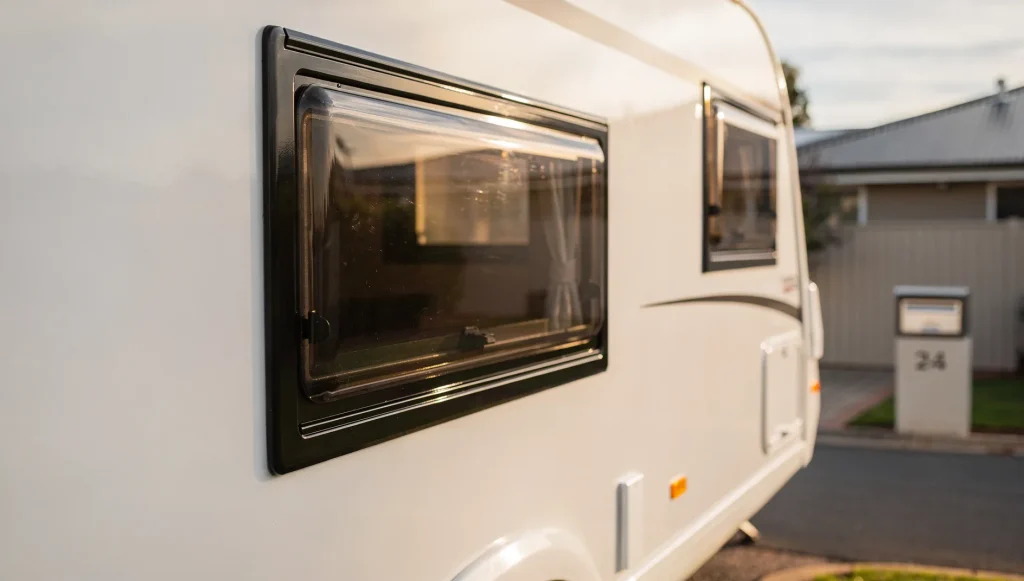
Most caravan owners will spend hours cutting, polishing and admiring their paintwork, then leave the windows and seals to fade quietly in the background. That neglect usually stays invisible until water appears on the floor, a cupboard smells musty, or a draught whistles through on a cold night. Good caravan window and seal maintenance is the overlooked first line of defence against all three, and it sits squarely within our broader caravan exterior detailing services in Perth rather than being a cosmetic afterthought. Treat the glass, rubber and the junctions between them as core exterior components, and you protect far more than just the view.
Prefer to watch or listen?
Listen onApple Podcasts
Why Windows and Seals Fail Faster in WA Conditions
Rubber seals and acrylic windows live a hard life in Western Australia. Relentless UV breaks down the surface of both, drying rubber out and leaving acrylic prone to hazing. Coastal salt air works into every seam, while fine red road grime from inland tracks grinds into seal channels and scratches soft window surfaces.
Then there is heat cycling. A van parked in the Perth sun can swing through huge daily temperature changes, expanding and contracting the materials over and over. That constant movement is what eventually works adhesive loose and opens tiny gaps where water can creep in.
How to Inspect Windows and Seals
A proper inspection takes only a few minutes and catches problems while they are still cheap and easy to address. Work methodically around the van and look closely at each opening.
- Run a finger along rubber seals feeling for stiffness, cracking or a chalky, perished surface.
- Check for hazing, crazing or fine scratches across acrylic windows that cloud the view.
- Look for lifting edges or soft, spongy adhesive around window frames where it meets the body.
- Watch for tell-tale water stains, swollen trim or a damp, musty smell inside – early signs of ingress.
- Open and close each window to confirm seals still compress evenly and sit flush.
If you find staining inside a cupboard or along a wall below a window, treat it as urgent. Water that reaches the timber or wall structure causes damage well beyond the seal itself.
Cleaning Glass and Acrylic Without Scratching
Cleaning technique matters more on a caravan than on a car, because so many caravan windows are acrylic rather than glass. Acrylic scratches easily and hazes permanently if you drag grit across it.
Start by flushing the surface with plenty of clean water to float away dust and grit before any cloth touches it. Use a soft microfibre cloth and a gentle, non-abrasive cleaner, and never wipe a dry window. Keep separate cloths for glass and acrylic so you are not transferring hard particles between them.
Do not forget the seal channels and drainage points. Dirt, leaf litter and road film collect in the lower channels and block the small weep holes that let trapped water escape. Clear these gently with a soft brush and a flush of water so the drainage path stays open – a blocked channel is a common hidden cause of leaks.
Protecting and Conditioning Seals
Clean rubber lasts longer, but conditioning is what keeps it flexible. A suitable rubber-safe conditioner feeds the seal and helps it resist drying, so it continues to compress and spring back as intended.
It helps to understand how sealants age. Older sealants and adhesives are known to harden, become brittle and deteriorate over time, particularly when exposed to weathering or temperature changes – the exact conditions a van faces year-round in WA. No amount of conditioning reverses a seal that has already gone hard and cracked; at that point it has reached the end of its working life. Conditioning is about slowing that decline, not undoing it.
A Seasonal Rhythm for Perth Travellers
Windows and seals respond well to a simple, repeatable routine built around how you actually use the van.
- Before a trip, inspect every seal and window and clear the drainage channels so nothing is blocked for the journey.
- After coastal or outback travel, wash off salt and road grime promptly before it bakes into seals and acrylic.
- Each season, condition the rubber and reassess any seals showing early perishing.
- During long storage, keep the van covered or shaded where possible, as unbroken sun does the most damage.
Vans that sit idle between trips still age. UV and heat cycling continue whether you are travelling or not, so storage care counts just as much as trip prep.
When DIY Care Isn’t Enough
Routine cleaning and conditioning is well within reach for most owners. Some situations, though, call for a closer professional eye. Widespread hazing, perished seals that need careful assessment, suspected ingress, or adhesive that is lifting around a frame all benefit from experienced hands and the right products.
A mobile detailing visit brings that attention to your van wherever it is stored, which matters when a van is tucked away and hard to move. The goal is simple: catch deterioration early and keep the exterior glass and seals doing their job.
Sealing out the elements up high and around every opening is only part of keeping a van road-ready. The same sun, salt and road exposure takes its toll lower down too, where the wheels and tyres and the surfaces that meet the road need their own care before the next trip.