
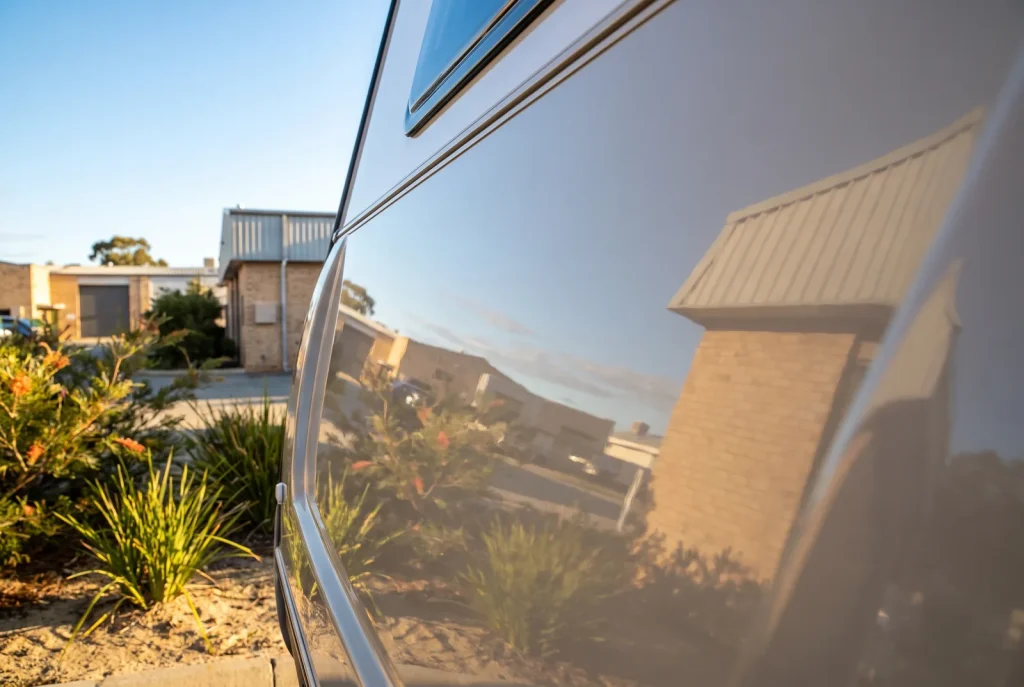
Most owners wait until a van looks obviously neglected before they act. By then, the surfaces have often been compromised for months. The tricky part is that the earliest warning signs are subtle – a slight dullness here, water that no longer beads there – and they’re easy to overlook on a van you see all the time. Spotting these signs early is exactly what separates cosmetic upkeep from real protection, and the caravan detailing experts Perth see the same recurring symptoms across neglected vans, each one pointing to a specific problem underneath.
Here’s how to self-assess your caravan before minor issues become permanent ones.
Prefer to watch or listen?
Listen onApple Podcasts
Chalky, Faded or Dull Surfaces
Oxidation is the most common form of surface breakdown, and it progresses in stages. In the early phase, painted panels and gelcoat lose their gloss and look slightly flat, even after a wash. You might notice the colour reads a shade lighter than it once did.
As it advances, fibreglass develops a chalky film. Run your finger across a faded panel – if a white, powdery residue comes off, that’s oxidation actively lifting the surface. Left long enough, the top layer degrades to the point where washing and waxing no longer restore any shine at all. Much of this traces back to prolonged sun exposure, which we covered in why UV exposure accelerates caravan deterioration.
Water No Longer Beads and Stains Won’t Shift
A protected surface sheds water in tight, rounded beads. When water starts to sheet and lie flat across your panels instead, the protective layer has broken down and the surface is now absorbing rather than repelling.
Watch for stains that survive a normal wash too. Yellowing around seals, dark tide-lines under windows, and rust-coloured streaks near fittings all suggest contaminants have bonded to an unprotected surface. If you’ve scrubbed a mark twice and it hasn’t budged, it has moved beyond ordinary cleaning.
Roof Warning Signs Owners Rarely Inspect
The roof is the most neglected part of any caravan simply because owners don’t climb up to look. Yet it takes the harshest exposure and shows trouble first.
- Grime and biological buildup that feels sticky or looks green-tinged
- Dark streaking running down the walls from roof edges and fittings
- Sealant and membrane areas that look brittle, cracked or lifting
- Pooled dirt around vents, hatches and air-conditioner mounts
If you can safely inspect the roof, do it periodically. Streaking down the sides is often the first visible clue that something above needs attention.
Interior Red Flags
Detailing isn’t only about the exterior. Several interior signs indicate surfaces have absorbed grime and moisture that regular cleaning can’t reach.
A musty or damp smell that returns after you’ve aired the van out is a warning worth taking seriously. Lingering odours often mean moisture has settled into soft furnishings or hidden cavities. Ingrained dirt on upholstery, panels that stay grubby after wiping, and a general dinginess that no amount of surface cleaning lifts all point to build-up that has worked past the top layer.
Rough Panels and Salt-Air Contamination
Close your eyes and run a clean hand across a panel. A well-maintained surface feels glassy and smooth. If it feels rough, gritty or bumpy, contaminants have bonded onto the surface – not just sat on top of it.
In coastal areas this is often salt-air residue combined with road film and airborne fallout. These deposits are abrasive and slowly etch into unprotected surfaces. That rough texture is your cue that washing alone won’t remove what has bonded there.
The Gradual Creep Problem
The hardest part of self-assessment is that deterioration is gradual. When you see your van every day, a slow slide into dullness barely registers – each stage looks like the last. Owners are frequently surprised when a photo from a couple of years ago shows how much brighter the finish used to be.
To benchmark your van honestly, try a few simple habits:
- Take a well-lit photo of the same panel every few months and compare them side by side.
- Do the water-bead test after a wash to check whether protection is still working.
- Run the touch test across several panels to feel for contamination.
- Compare a shaded, less-exposed section against a sun-facing one to gauge how far the exposed side has faded.
These small checks turn an invisible, creeping problem into something measurable you can actually track.
Acting on What You’ve Found
Recognising these signs early gives you the chance to protect and restore surfaces while the damage is still reversible. Oxidation, bonded contamination and moisture problems all become harder – and sometimes impossible – to correct the longer they sit. A professional assessment removes the guesswork, confirming which signs are cosmetic and which point to something that needs proper correction. The value is in acting on the warning signs rather than waiting for the van to look obviously neglected.